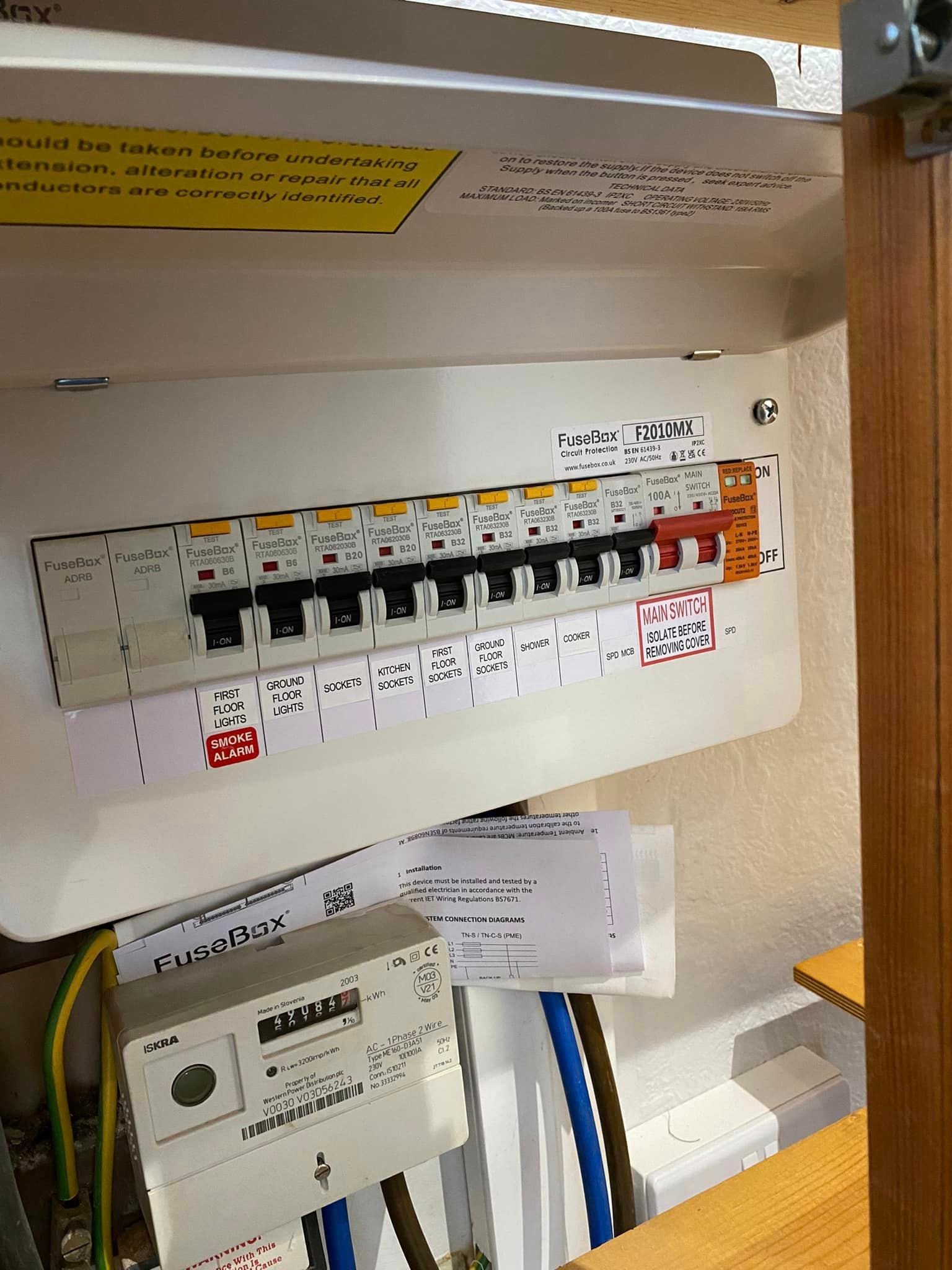
Fuse Board Upgrades
A modern, non-combustible consumer unit with every circuit protected and labelled, certificated in full and notified through our registration.
Change a fuse board, add a circuit, rewire a property or work in a bathroom, and the job is not finished when the tools go away; it is finished when the certificate is issued. Here is which certificate you get for which work, and why the paperwork is worth as much as the wiring.
Get your certificate issuedEvery piece of new electrical installation work is inspected and tested to BS 7671 before it is put into service, and the certificate is issued on completion. It is not an optional extra, and we issue it as part of the job, not as something you have to ask for. Which certificate you receive depends on the scope of the work.
An Electrical Installation Certificate (EIC) covers the bigger jobs: a new installation, a rewire, a consumer unit change, or any work that creates a new circuit. A Minor Electrical Installation Works Certificate covers additions and alterations to an existing circuit (an extra socket, a new light point) where no new circuit is involved.
Both come with the measured test results behind them. That is what separates a certificate from an invoice: it is a signed declaration that the work was designed, built, inspected and tested to the standard, with the readings recorded to prove it.
The dividing line is the new circuit: create one, or replace the consumer unit itself, and the work gets the full certificate. Extend or alter what already exists (even where the work is done at the board, such as changing a protective device), and the Minor Works Certificate covers it, with test results either way. If you are unsure which your job needs, ask; the answer costs nothing and the certificate is included in the price we quote.
Some electrical work in homes is notifiable under the Building Regulations in England: Part P. In broad terms that means a new circuit, a consumer unit replacement, or additions and alterations to existing circuits in a special location. In England that does not mean the whole bathroom: it is the space around the bath or shower itself (within 0.6 m of the edge of the bath tub or shower tray, or 1.2 m of the shower head where there is no tray, up to 2.25 m above floor level), together with any room containing a swimming pool or a sauna heater. These are the places where the consequences of getting it wrong are highest, so the law wants a record that the work was done by someone competent.
Because we are Part P registered, we self-certify notifiable work through our scheme registration. We lodge the notification for you, our certification scheme informs the local authority, and a Building Regulations compliance certificate is issued to you, normally within 30 days of completion, in addition to the electrical certificate we hand over. No separate application to building control is needed for the electrical work; keep both documents, and tell us if the compliance certificate does not arrive.
That matters more than it sounds: uncertificated notifiable work surfaces at the worst possible moment, usually in a solicitor's enquiries when you sell. Two pieces of paper now save a retrospective headache later.
Tell us what was carried out and we will tell you straight which certificate should have been issued, and what can be done about it now.
The property, the extent of the work, and exactly which circuits were installed or altered, so there is never an argument later about what the certificate covers.
Signatures for the design, the construction, and the inspection and testing of the work: a named, qualified person standing behind each stage.
The earthing arrangement, the protective devices and their ratings: the context the next electrician needs before touching anything.
The certificate must be accompanied by its schedules of inspection and test results: continuity, insulation resistance, polarity, earth fault loop impedance, prospective fault current and RCD operation for the circuits worked on. Without those schedules it is not valid.
When the installation should next be looked at, which is where the EICR cycle picks up.
A certificate can only be issued by the people who did the work, at the time; nobody can certificate someone else's old installation after the fact. An EICR is the way to establish that the installation is safe today. One caveat for sellers: an EICR is not Building Regulations paperwork. If old notifiable work was never notified, that gap is a matter for your solicitor, who may suggest a regularisation application or indemnity cover.
A modern, non-combustible consumer unit with every circuit protected and labelled, certificated in full and notified through our registration.
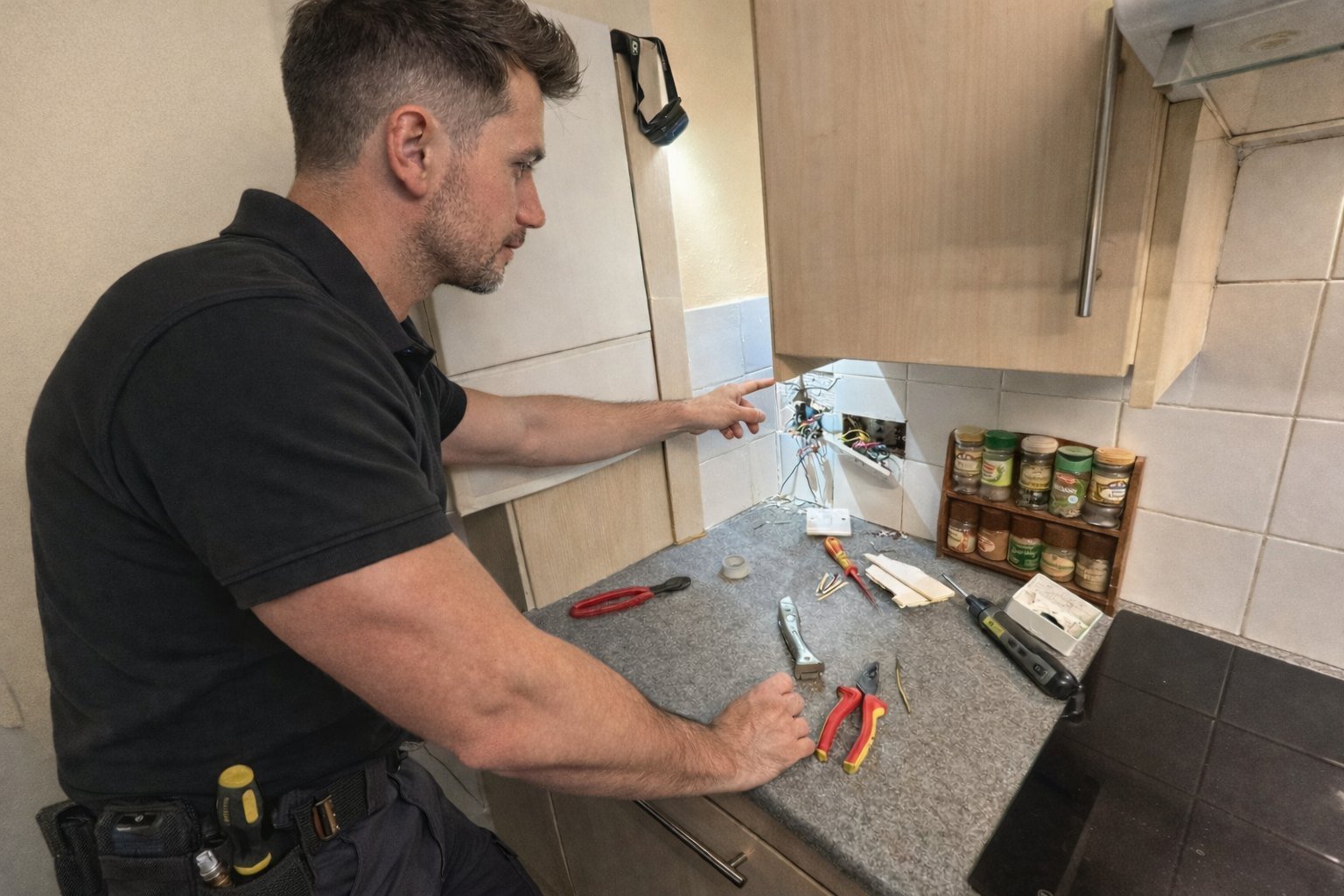
Full and partial rewires, tested circuit by circuit before energising and handed over with the EIC and its schedules of test results.
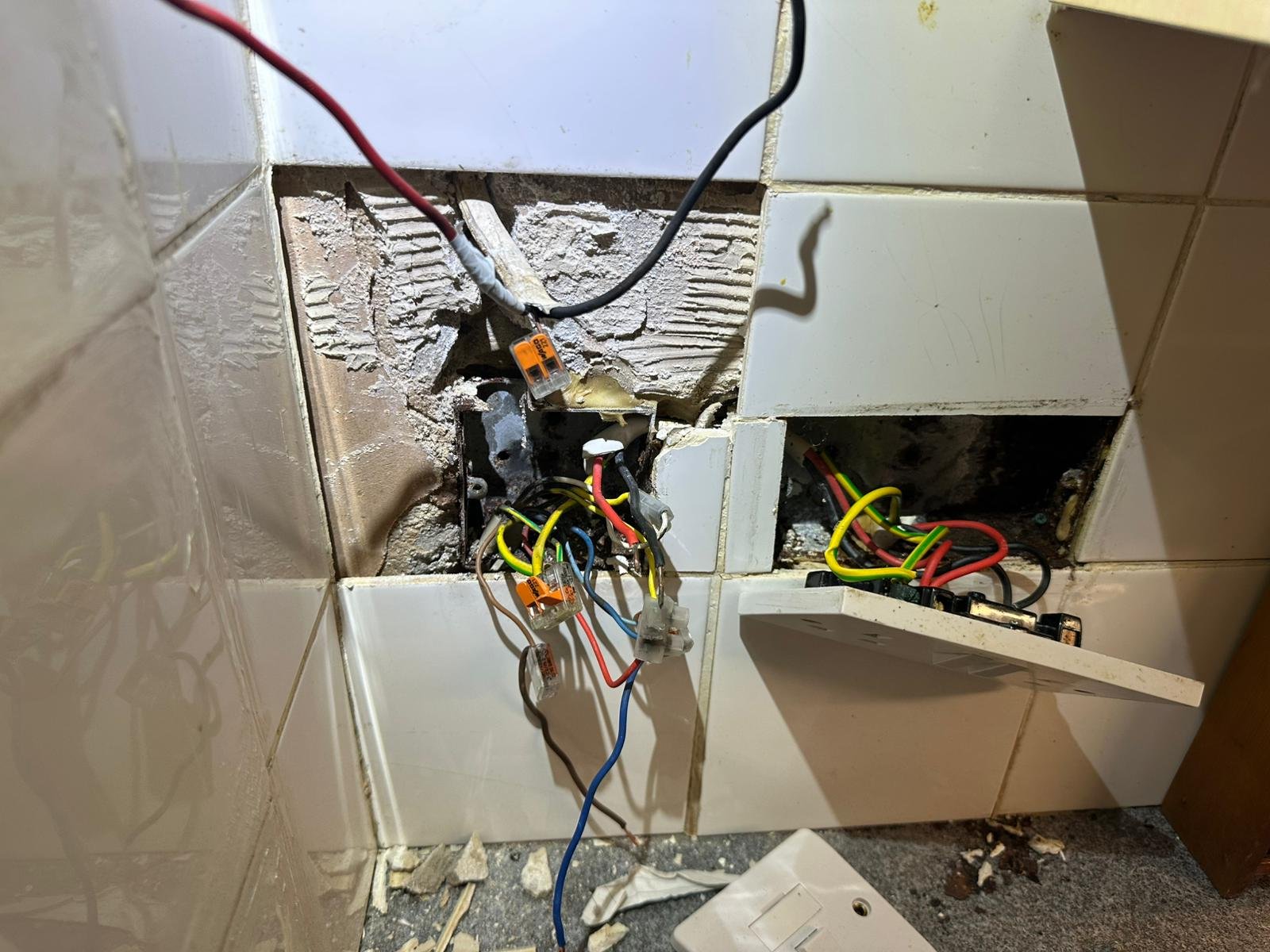
Clearing an unsatisfactory EICR ends with certification for the work: the paper trail that gets a landlord's report accepted.
A new circuit or a consumer unit change takes the full EIC; anything altering an existing circuit takes Minor Works. Ask before you book.
General guidance only, not legal advice. Confirm your own duties with your local authority.
Planning a board change, a rewire or a new circuit, or been asked for a certificate you do not have? Tell us what the job is and we will tell you exactly which paperwork it comes with.
Talk to a specialist