The report
Observations with classification codes (C1, C2, FI or C3) and an overall outcome of satisfactory or unsatisfactory. Each observation records what was found and where.
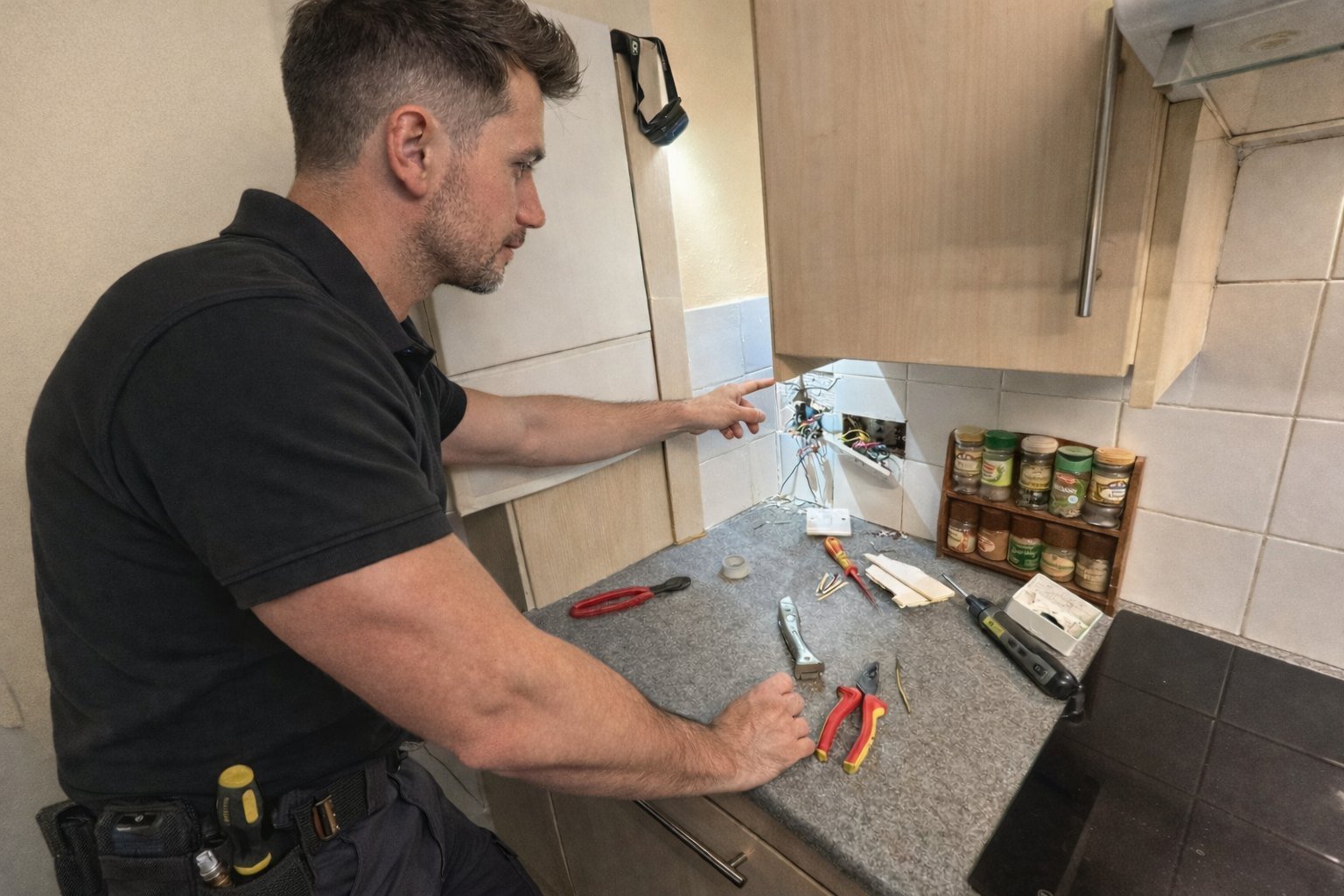
If you have never had an Electrical Installation Condition Report done, it helps to know what the visit actually involves. Most homes take around two to four hours, longer for large or complex installations. Power is switched off circuit by circuit while each one is tested; the whole property is not off for the whole visit.
Book your visitThis article covers how booking works, what happens on the day in order, how to prepare, and what you are handed at the end.
When you call, we ask three things: how many bedrooms the property has, where the fuse board (consumer unit) is, and how we get access on the day. The number of bedrooms gives us a reasonable idea of how many circuits there are and how long to allow. The fuse board matters because that is where most of the testing happens.
For rented properties, access is usually arranged with the tenant, and we can deal with them directly if that is easier for you. Either way, you get an itemised quote before any work is agreed, so you know exactly what the inspection covers and what it costs.
Every EICR follows the same broad sequence. The installation is assessed against the current edition of BS 7671 (the wiring regulations).
The electrician starts by looking before testing anything. That means the fuse board, a sample of sockets, switches and light fittings, and any visible wiring, checking for damage, wear, signs of overheating and alterations that do not meet the wiring regulations.
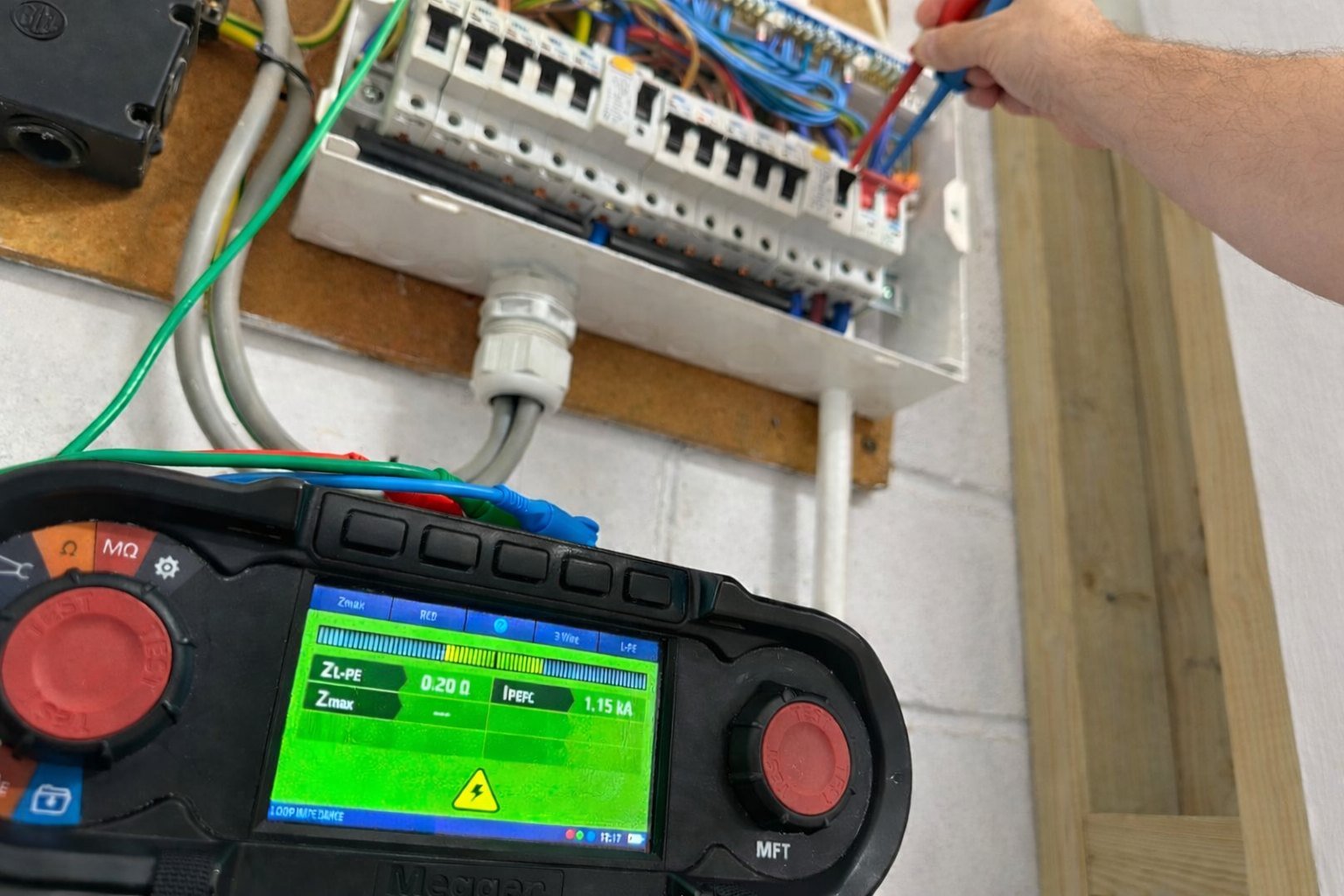
Power is switched off one circuit at a time and each is tested with a multifunction tester. The main checks are continuity (protective conductors are connected end to end), insulation resistance (the insulation around the cables is not breaking down) and polarity (live and neutral are connected the right way round).
With power back on, the electrician measures earth fault loop impedance (how easily fault current can flow to earth, which determines whether protective devices will disconnect fast enough) and tests RCD trip times to confirm they cut off within the required limits.
Everything is re-energised and checked as working. The fuse board labelling is updated so each circuit is clearly identifiable, and the electrician talks you through anything found before leaving.
Most homes are done in two to four hours, and we can usually attend within a day, often the same day.
Observations with classification codes (C1, C2, FI or C3) and an overall outcome of satisfactory or unsatisfactory. Each observation records what was found and where.
The recorded readings for every circuit tested: continuity, insulation resistance, earth fault loop impedance and RCD trip times. These are the evidence behind the outcome.
We go through the report with you and explain what each code means, what needs doing and how urgent it is. You are not left to decode it on your own.
That is all we need to quote. Prices run from £175 for a one bed flat to £350 for five or more, often with same day attendance.
The overall outcome is satisfactory or unsatisfactory; there is no pass or fail. A C1 means danger is present and there is an immediate risk; the electrician will tell you on the day and, wherever possible and with your agreement, make the immediate danger safe (usually by isolating the affected circuit) before leaving. A C2 means potentially dangerous, with urgent remedial action required, and an FI means further investigation is required without delay. Any C1, C2 or FI makes the report unsatisfactory. A C3 is an improvement recommendation only, and a C3 on its own should not make a report unsatisfactory.
If the property is privately rented in England, the Electrical Safety Standards in the Private Rented Sector (England) Regulations 2020 will usually apply (some tenancy types, such as social housing, lodgers and leases of seven years or more, are exempt). Give a copy of the report to existing tenants within 28 days of the inspection, to new tenants before they occupy, and to the local authority within 7 days if they ask for it.
If the report is unsatisfactory, remedial or further investigative work must be completed within 28 days, or sooner if the report specifies. You then need written confirmation from a qualified person, supplied to your tenants and the local authority within 28 days of completing the work. Local authorities can fine up to £30,000 per breach, so it is worth dealing with promptly. We quote for any remedial work itemised, so you can see exactly what each item costs before deciding.
What the report covers, who needs one and when: the complete guide to our EICR and fixed wire testing.
To book an EICR anywhere in Sussex, call 0333 360 8583 (the line is answered 24 hours a day) or email info@eicr-pro.co.uk. Tell us the number of bedrooms and where the fuse board is, and we will give you an itemised quote before any work is agreed. EICR Pro is the electrical safety certificate service of Power Pros Electricians: Part P registered, City & Guilds qualified electricians, and £2,000,000 public liability insurance.
Call 0333 360 8583This article is general guidance, not advice on a specific installation; the coding and outcome of any EICR are always the inspector's judgement on the day.